Weekly Meter

DC / MD / VA / WV

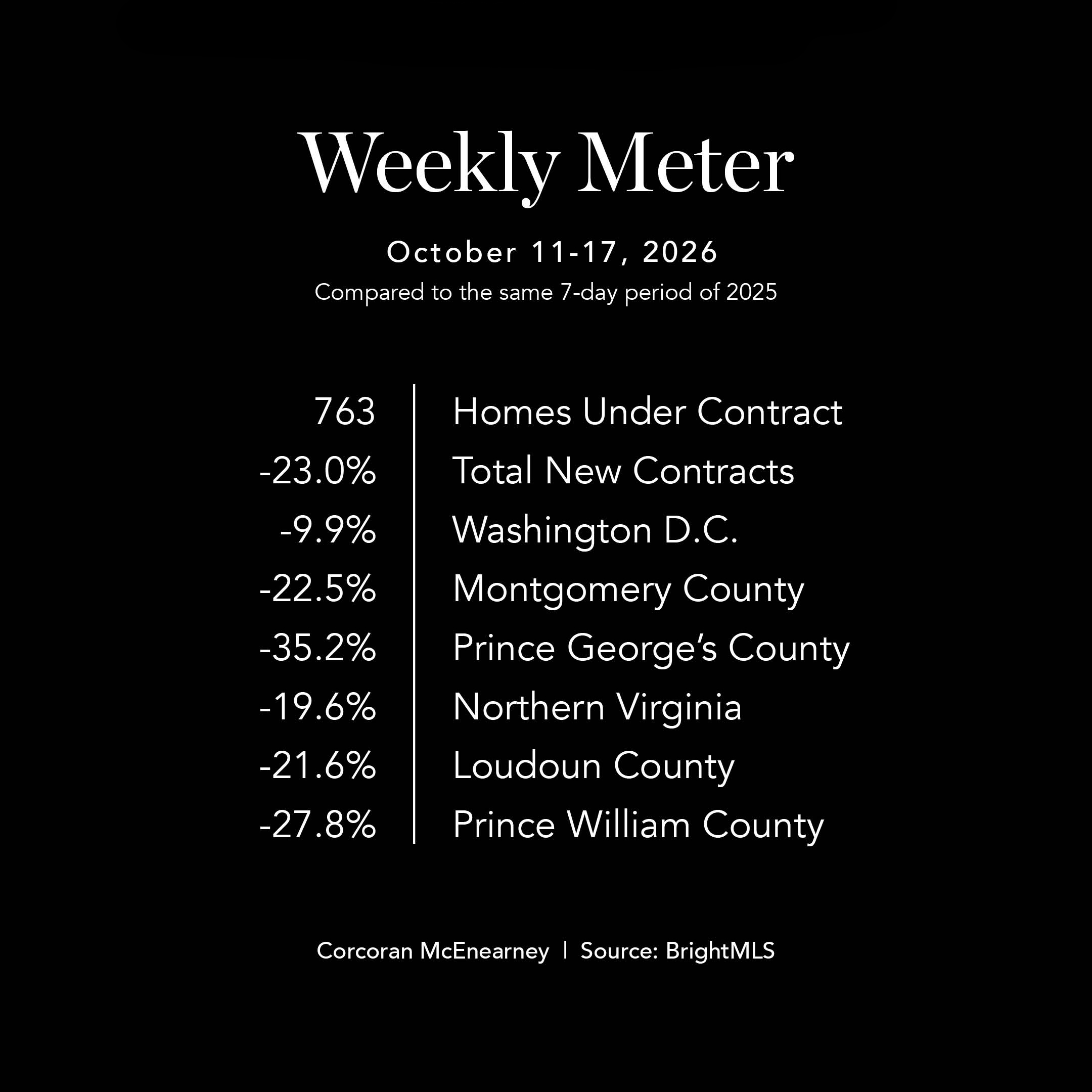
We compare contract activity for the same seven-day period of the previous year in Loudoun County, Prince William County, Northern Virginia, Washington, DC, and Prince George's County. These statistics are updated on a weekly basis. Sign up for our newsletter on the latest market data.
Weekly Meter_SocialMedia_master-2

Mother Nature Always Wins

Contract activity across the Metro DC area fell 20.9% compared to the same week last year.


Key Takeaways

  • If last week taught us anything, it’s that buyers may be patient—but Mother Nature is undefeated. A significant snowstorm across the region sharply curtailed showings, disrupted open houses, and made even the most motivated house-hunters think twice before braving icy roads. The result was a clear, weather-driven pause in contract activity across the Metro DC area.
  • Northern Virginia contract activity slowed modestly last week, with snow clearly limiting showings and decision-making. The impact was most visible in higher price points, where in-person traffic matters most. Year-to-date trends remain positive, but last week was a reminder that even a resilient market pauses when roads do.
  • Loudoun County felt the weather impact acutely, particularly in the luxury segment. Buyer interest remains intact, but snow reduced mobility and delayed commitments. Expect activity to normalize as conditions improve, especially given strong year-to-date performance.
  • Prince William County was the outlier last week as the only jurisdiction with an increase in newly ratified contracts.
  • Montgomery County – the storm significantly disrupted momentum in Montgomery County, where contract activity pulled back sharply. Rising days on market reinforce that buyers are engaged but deliberate—and last week, largely housebound.
  • Prince George’s County saw a notable weather-related slowdown, particularly in mid-range price points. Demand sensitivity remains high, and reduced access during the storm amplified that effect.
  • Washington, DC experienced one of the sharpest pullbacks of the week. Snow compounded an already cautious urban buyer mindset, especially in higher price tiers. Elevated days on market continue to signal hesitation rather than absence of interest.


Why It Matters

  • Average days on market for properties going under contract jumped from 39 days this time last year to 71 days last week, reinforcing an already well-established theme for 2026: buyers are active, but in no hurry. Weather slowed the process further, stretching timelines even for homes that ultimately found a buyer.
  • Importantly, the year-to-date numbers continue to tell a steadier story beneath the snowdrifts. In several jurisdictions, contract activity remains ahead of last year’s pace overall, suggesting that demand hasn’t disappeared—it simply took a snow day. As temperatures rise and roads clear, some rebound in activity would not be surprising, particularly given improving inventory levels and stable mortgage rates.
  • For now, last week serves as a useful reminder that short-term data can be noisy, seasonal, and occasionally frozen solid. Markets respond to economics, psychology, and supply—but when a snowstorm hits, even the most resilient housing market yields to the laws of physics.

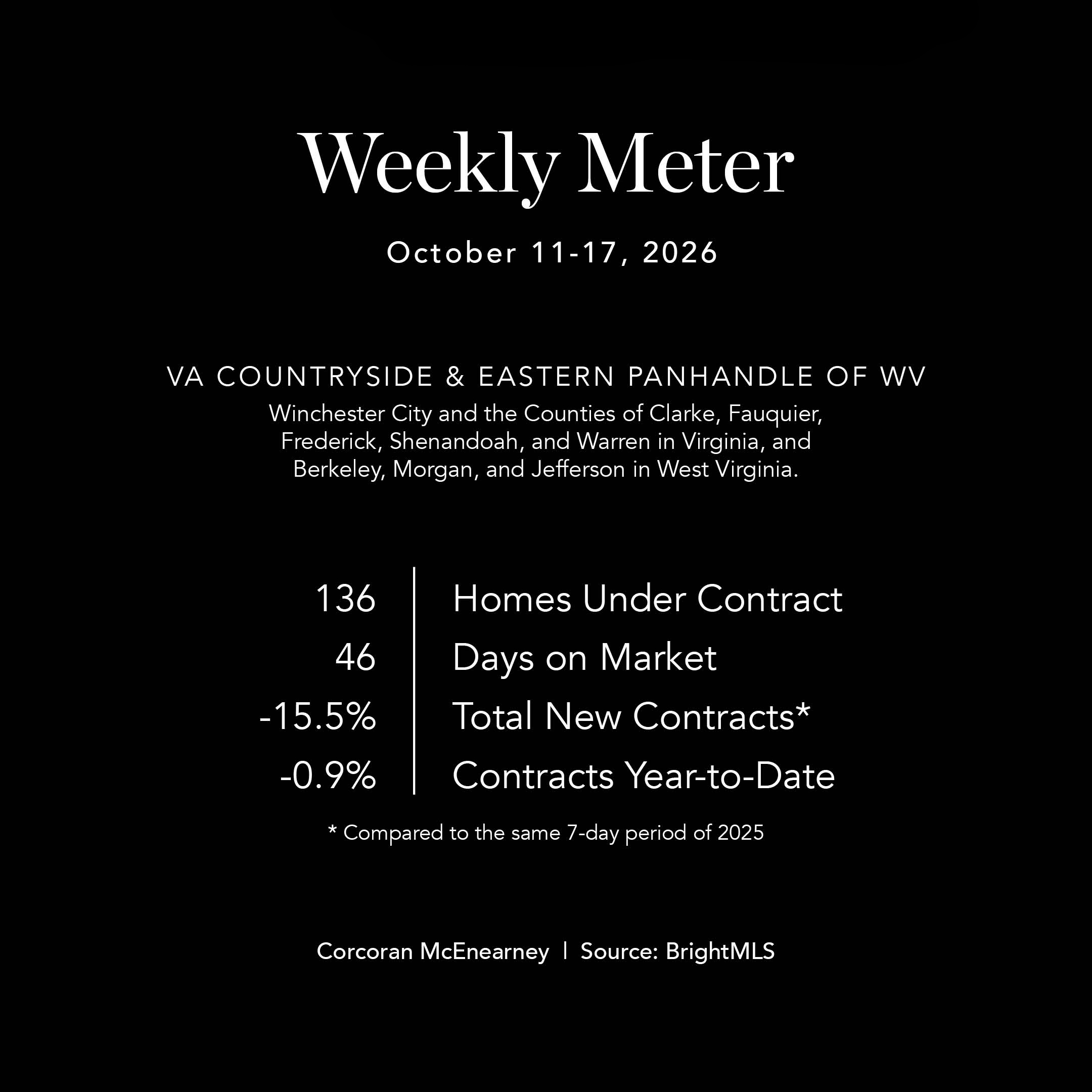
Shenandoah, Warren, Clarke, Fauquier, Frederick Counties, Winchester City, and West Virginia.

Mother Nature Always Wins (Even Out Here)

Contract activity for January 25 - 31, 2026 in the Virginia Countryside and West Virginia Panhandle was down 20.2% compared to the same seven-day period last year.


Key Takeaways

  • Last week’s snowstorm proved that even in markets where buyers are used to longer drives and open roads, weather still gets the final word. Across the Virginia Countryside and West Virginia Panhandle, snow and ice significantly curtailed showings, delayed decision-making, and put a temporary chill on contract activity.
  • Simply put: fewer cars on the road meant fewer contracts signed.
  • Virginia Countryside - Contract activity softened last week as snow and ice sharply reduced showings and slowed buyer movement. While higher-end segments showed relative resilience, overall momentum paused due to weather—not demand. Year-to-date trends remain strong, suggesting this was a temporary interruption rather than a shift in market direction.
  • West Virginia Panhandle – the Panhandle experienced a notable weather-related slowdown, particularly in its core under-$750,000 price ranges where weekend access is critical. Average days on market edged higher as buyers delayed decisions. Underlying demand remains steady, but last week clearly reflected winter conditions rather than market fundamentals.


Why It Matters

  • Average days on market increased from 57 days this time last year to 62 days last week, reinforcing the broader theme we are seeing across the region. Buyers are active and engaged—but patient—and the weather only extended timelines further.
  • Importantly, the year-to-date picture remains constructive. In the Virginia Countryside, contract activity is running well ahead of last year, with strength across both mid-range and higher price points. The West Virginia Panhandle is tracking closer to last year overall, but continues to see solid demand in its core price bands. Last week’s dip looks far more like a weather interruption than a change in direction.
  • As we often say, short-term weekly numbers can be noisy—especially in winter. Snowstorms create pauses, not pivots. As conditions normalize, we expect activity to reassert itself, supported by steady demand, improving inventory, and buyers who were delayed, not deterred.


The Real Estate Details

  • Virginia Countryside was down 9.9% but is up 21.2% year-to-date.
  • West Virginia Panhandle was down 28.3% but is up 0.9% year-to-date.
Weekly Meter_SocialMedia_master8

Ready to find out more? Let's get started.